Monday, August 24, 2020

Survivor Retrospective: All-Stars

Rating: 3/10

Coming off the heels of the franchise's two best seasons, featuring a hand-picked cast of stalwart players, with the nuts & bolts of production and editing mastered, Survivor All-Stars appeared as if it would be infallibly entertaining. But while the previous two seasons impeccably navigated the hazards of predictability, castaway distress and casting doldrums, All-Stars found them all. Hotly-anticipated by casual and diehard fans, All-Stars quickly fell into treacherous waters and never recovered. It was a massive clunker.

Mark Burnett & co. didn't make many casting mistakes, but the few they did came back to haunt them. It felt like Jenna Lewis got the nod due to nostalgia for the debut season rather than anything she did to accentuate herself there; in All-Stars she persisted all the way to final three without a memorable moment. Sue was as caustic on All-Stars as she was in that debut; this time her infamous moment came through a sexual harassment scandal rather than an angry speech. Alicia was on hand because of her fitness and demographic; she failed to provide anything compelling before busting out seventh. Jerri was selected to fill the femme fatale role; she organized a blindside or two of superior players before being pathetically discarded. Many former castaways - including champions Sandra and Vecepia and luminaries like Colleen, Greg, Heidi, Brandon and Kim Powers - would doubtlessly have made the season more watchable. 

The first half of the season was submarined by a series of unfortunate exits. Two of the exits were unfortunate for the castaways themselves, as Jenna Morasca decided to leave the game for her cancer-stricken mother (arriving home eight days before she died) and Sue quit after a naked Richard Hatch rubbed his genitalia against her during a challenge. Nevermind that Hatch is gay, that Sue hardly reacted in the moment or that Hatch was voted off before Sue exploded - once again a cast member felt they were violated, and once again Survivor did nothing about it. All-Stars is further evidence Survivor's handling of sexual harassment is long, checkered and deficient. 

The Alpha-males of All-Stars set about to devour each other as soon as they got off the boat. There wasn't enough room for two Robs in an initial tribe of six, so Cesternino was offed by the Robfather before sinking his strategic claws into the game. The aforementioned Hatch lost an alpha-battle to Colby, who had his own back stabbed at the next Tribal Council. On day 21, Ethan became the final former champ to fall. None of it was particularly captivating; the show's most engaging moments centered around Amber & Rob's love story (begun before the halfway point of the first episode), Hatch winning a protracted battle with a shark and Rupert failing on a shelter.

The castaways received a surprise when, with ten left, they swapped buffs instead of merging. Coincidentally, every member wound up with their previous tribemates except for Amber. She was the obvious target, but the Robfather made a dramatic move. During a transition after the immunity challenge, Rob pleaded with Lex to spare her in exchange for a future favor. Amber scrapped, charmed and promised as best as she could with her new tribe. Lex talked it over with Kathy and they decided to take the gambit, ousting Jerri instead of Amber. The tribes merged in the next episode. Instead of a favor, the Robfather served Lex a summons to be the first member of the jury. Kathy was next, but not before shedding many tears over ravaged friendships. 

It was hard to sympathize with them. Having watched Marquesas, Kathy and Lex should've known Rob's word was meaningless. Kathy even played alongside him that season. Kathy and Lex could've voted Amber off and controlled the post-merge game, but they fell victim to Survivor's most classic mistake: misjudging the significance of a short-term relationship within the sphere of the game. Apparently their relationship with Rob had developed outside of the game, illuminating another way in which All-Stars misfired: players who know and know of each other are less interesting to watch because their interactions are less deceptive. Kathy's agony felt more deserved than Lex's, as he'd presided over half a dozen eliminations of "friends" in the name of strategic gameplay.

The second pivotal moment of the game came with five left. Incorrectly concerned Big Tom might turn on them, Amber and Rob elected to go with Jenna and Rupert to the final four. Jenna cemented her undistinguished, unprincipled legacy by stabbing Rupert in the back rather than drawing rocks. Then she screwed up an endurance challenge and busted out third. Rupert's exit didn't contain the tragic element it did on Pearl Islands, as his personality and providing lost some of its vibrancy and he was clearly in over his head strategically. Rupert got the last laugh when fans awarded him a million bucks in a surprise special America's Tribal Council four days after the reunion.

That reunion finale was actually the best episode of All-Stars. The season's preeminent storyline gained weight when the audience saw Amber & Rob were still together; when he proposed to her and she said yes, it truly appeared a duo had won the game together. Indeed, they had played the entire game together. Their alliance was greater than the sum of its parts. Rob was in peak form throughout the season, more nuanced than the heavy-handed soldier-in-training we saw in Marquesas, dominant in mental and physical challenges, just as providing as Rupert if he set his mind to it. Amber played a brilliant social game, massaging and blinding the other castaways from the finality of her alliance with Rob. Moments after becoming his fiancée, Amber defeated Rob 4-3 to become The Survivor All-Star. It was the proper result, as Rob's social manipulations had been too ruthless for the Jury to stomach, his Final Tribal performance so wretched you wondered if he was trying to throw the vote.

Amber & Rob wrote the book on Survivor coupling - how to start, how to play and win the game, and how to make it last afterwards. It was an impressive achievement, an alliance of mind, purpose and spirit never seen before or since. No two players have ever immersed themselves so deeply into the game, erasing and rewriting the boundaries between game and life. Their legacy is two championships, two of the hardest dominations in Survivor history, and decades of castaways insistent on breaking apart any hint of a potential couple.

Saturday, August 15, 2020

Survivor Retrospective: Pearl Islands

Rating: 9.5/10 

Pearl Islands accelerated the momentum generated in The Amazon, parlaying the whimsy of its opening pirate theme into a thrilling and dynamic closing stretch. While The Amazon was clearly engineered to dramatize sex, Pearl Islands relied on the charm of its castaways and the skill of its editors to produce the best season of the first seven and an entry into the pantheon of all-time greats.  

The banality of Survivor's initial meet & greet got a shot in the arm when the Pearl Islands castaways were forced to barter for supplies in a Panamanian town. The Drake tribe got off to an imposing start thanks to Sandra, whose Spanish and disposition obtained them an array of useful supplies. The Morgan tribe splintered haplessly and returned with few possessions - not even their shoes, which had been pirated by Drake's Rupert after Morgan left them unwatched.

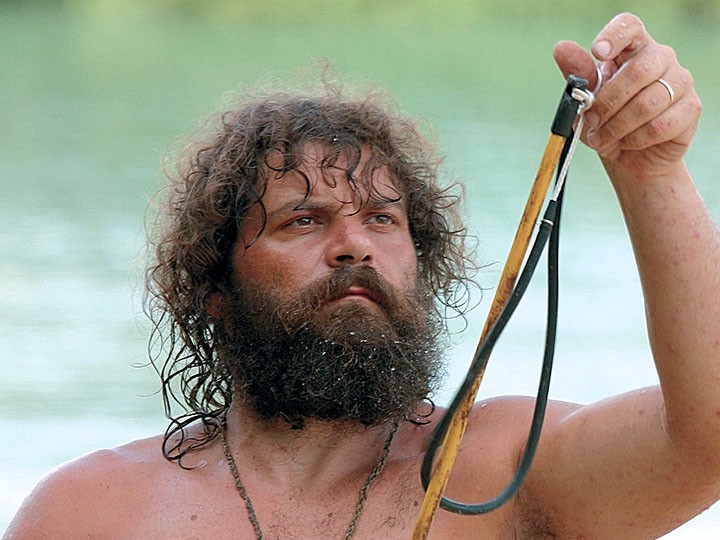
Rupert's first impression was that pilfering, but he quickly endeared himself to his tribe and audience by providing. Rupert immediately distinguished himself as the premier provider in the game's history, casually catching enough seafood for all of Drake to feast on every day. Drake's only hiccup came when Rupert reluctantly allowed doofus Shawn to fish with his prized spear; Shawn predictably lost the spear, but Rupert located it on the Pacific Ocean floor after several hours of searching in a grid. 

Drake decimated Morgan with six straight challenge victories to open the game. To make matters worse, the reward challenges included the right to plunder one item from the other tribe. Drake lowered the bootheel by thieving the most prized of Morgan's few possessions. The dichotomy of the first two weeks was stark: Drake's castaways lived more comfortably than any survivors in history, while Morgan's suffering was so acute it spawned the first quitter in Survivor history, Osten. 

Drake's first challenge loss was purposeful, as they elected to tank an immunity challenge despite Rupert's reservations. That proved to be the crack Morgan needed to get back into the game; they edged Drake in the next two immunities to settle the player score at 5-5. 

Then came the twist, the most hair-raising of the first seven seasons: all the players who'd been eliminated suddenly strutted back into the game as the "Outcasts" tribe. One Outcast would be eligible to return to the game per tribe they defeated in a challenge. The Outcasts prevailed over both tribes in the challenge, so two got to return to the game in place of Drake and Morgan members voted out that night.

The twist backfired when the Outcasts "voted in" unentertaining Lill and scheming Burton. Socially-incompetent Lill persisted all the way to Final Tribal, while conniving Burton joined forces with a supervillain to orchestrate the murder of the show's most celebrated hero.

By the time his back was stabbed, Rupert's heroism bordered on mythical. He'd been briefly swapped to Morgan, who he rescued from destitution before returning to Drake. His confessionals revealed surprising vulnerability, a former fat kid who fashioned himself "The best damn Survivor player ever." Rupert was more than the game's greatest provider: he was a challenge beast, a loyal ally, a wonderful companion and an articulate tactician. Rupert set a record for per-episode screentime before his downfall, edited to be a Shakespearean tragedy in the vein of Julius Caesar.

Rupert was assassinated by an unholy cadre of Morgans, Outcasts and his own Drake companion, Jonny Fairplay. The latter slowly emerged as the preeminent villain of the game's first seven seasons, an egocentric cancer who delighted in strategic exploitation. Fairplay launched his most legendary gambit during the family visit episode, faking his grandmother's death for pity so the other castaways would let him win the challenge - giving up their own rights to see family members so Fairplay could hang out with his friend.

The season lulled briefly without Rupert, as Fairplay and Burton brutishly took control of the game while their bromance bloomed. They may well have ridden the wave all the way home if not for committing a classic mistake: the devious duo went on an extravagant reward together, leaving the other three castaways together at camp. Darrah, Lill and Sandra quickly conspired to vote Burton out. The female plotting was interspersed with decadent clips of Burton & Fairplay congratulating each other on their control of the game while blasting the women as helpless, thickheaded sheep.

When the men returned, each woman played up the stereotype they knew Burton & Fairplay considered them to camouflage their alliance: Darrah played dumb and detached, Lill acted increasingly erratic and antisocial, while Sandra pretended she was giving up before "accepting" a final three offer from the men. Burton & Jon sniffed out the ruse, noting the melodrama in Darrah & Lill's performance. But Sandra obliterated the men with detailed, nuanced lies built on the foundation of her ruthless reputation. It was a stunning, glorious late-game rise for one of Survivor's all-time greats, the third and most unexpected of Pearl Islands' classic characters to emerge.

Sandra laid low for most of the season, but her performance down the stretch revealed her to be one of the shrewdest thinkers to ever play the game. Sandra found herself on the wrong side of the numbers several times down the stretch, but always found a way to linger at the back of the slaughterhouse line. She never received a vote against.

For once the edit played it straight, casting incandescent light on Burton's impending demise instead of trying to blindside the audience. The men appropriated the unusual edit with bushels of wildly chauvinistic confessionals, entertainingly cut with clips of Sandra dunking on them. Burton's torch was snuffed at an epicly satisfying Tribal Council, with Jeff Probst joining the dunk contest: "For the second time, the tribe has spoken."

Fairplay was spared at the next Tribal in order to oust Darrah the challenge-dominator, leaving a disjointed final three of Fairplay, Lill and Sandra. Lill outlasted Fairplay in the endurance challenge, then surprisingly chose to go to Final Tribal with Sandra. Lill claimed her decision was motivated by honor at the Reunion Show, but had said on camera she was choosing based on who she could beat. Four jurors said they would've voted for Lill over Fairplay, so perhaps Lill gave up $900k by choosing Sandra. In confessional, Sandra said she'd surely vote herself out and expected Lill to off her. In any case, Survivor fans are forever indebted to Lill for choosing Sandra. If daft Lill or evil Fairplay had won, it would've felt hollow after such an illustrious and dynamic season. Instead, Sandra's dominant Final Tribal performance and 6-1 vote trouncing capped a thoroughly satisfying finish to a classic season.

Friday, July 31, 2020

Survivor Retrospective: The Amazon


Rating: 8.5/10
 
After the beleaguered boredom of Marquesas and the dreary chauvinism of Thailand, Mark Burnett & co. had to inject something to change the course of the franchise. Their answer was sex.

The Amazon pitted tribes of eight men and women against each other. This time, they'd been filtered by production for watchability. Unlike Thailand and Marquesas, most of these people were interesting. Most were intelligent. They were almost all white. An inflated percentage of them were very attractive. And most appeared to be single.

Early moments of The Amazon suggested a Bachelor takeoff, with groups of singles selected for their attractiveness and competitiveness disconnected from the other sex, then suddenly and unexpectedly mingled. The castaways, particularly the worst players among the men, seemed to view Survivor as some sort of dating contest. Talk of who was going to get with who seemed to overwhelm the men, blurring their focus on early challenges and tribal councils. Who was the hottest girl? Was it enhanced blonde Heidi? Swimsuit model Jenna? Or was it actually Shawna? The guys couldn't stop talking about their favorite-looking women and body parts, not with each other, not in confessionals, not even at Tribal.

And Jeff Probst was happy to egg them on, asking leading questions before admonishing them. It was all wildly inappropriate, strikingly obscene viewed in 2020. While previous seasons had quietly courted and exploited sexual drama, The Amazon overtly encouraged it. The season was cast to inspire sexual thoughts, it was structured to inspire sexual thoughts and it was edited to inspire sexual thoughts. Any claim Survivor does not seek to exploit sex is fallacious on account of The Amazon.

The players who best understood gender dynamics from the beginning gained control of those who didn't and those who couldn't contain themselves. Jenna immediately identified the gendered tribes as a setback, as her ability to manipulate men was her greatest strength. Heidi, Jenna and Shawna constructed a Cute Girl Alliance - largely in self-protection from women they feared would ostracize them for their looks. After a tribal swap, Heidi backstabbed her female tribemates and laddered up a male alliance. Jenna concurrently turned the game by flipping a numbers disadvantage into an ultra-satisfying blindside of the Token Bigot, Roger. Heidi and Jenna tantalized the men with encouragement of threesomes. In the season's most famously bombastic moment, they got naked for peanut butter and chocolate.

Others played the sexual game less explicitly. Perceptive Deena refrained from the drama while observing and manipulating it, combining a surprise attachment to the Cute Girl Alliance with secret male emissaries. Charming Alex patiently abided the men before his preferred opportunity arrived alongside the Cute Girls.

The most instantly chauvinistic men were the first to go, with Bachelorette rejects Ryan and Dan quickly sent back to the gym. The Token Bigot received his blindside homicide, throat cut by those he'd dismissed Walder Frey-style. Delightfully, the game consolidated to its best and most entertaining players. Where previous seasons had stagnated from predictable post-merge voting blocks, The Amazon's intrigue steadily accelerated to Final Tribal. Sexuality quietly receded to a non-factor, replaced by strategy and deception. Most importantly, though, these people compelled you to care about them.

There was Dave, a literal rocket scientist. He was attractive and virtuous too, though not virtuous enough to avoid a dooming alliance with the Token Bigot. Deena's pithy observations endeared her to the audience and eventually her captivating, clandestine alliance. Alex was the Bachelorette contestant who might actually win the Final Rose. Deaf Christy battled her disability and those who made her feel unwelcome. Heidi entered the game's pantheon of legendary babes, overcoming the "disability of sexiness" she and Jenna controversially alleged. Celebrated for her looks, Heidi persisted in the game thanks to intellect and determination. Most of the castaways thought runner-up Matthew was a creep, but his confessionals mostly revealed eccentricity and thoughtfulness. Jenna was pretty and she knew it, but her 6-1 Final Tribal win came on the shoulders of a commendable social game and four individual immunity challenge wins.

Each of these players made The Amazon entertaining in ways the previous two seasons hadn't been. But one player superceded them all, elevating The Amazon to the top tier of classic Survivor seasons. That player was "probably the smartest player the game of Survivor has ever seen - that didn't win" according to Jeff Probst. He dominated the strategic sphere of the game like no player before, not even Richard Hatch. With four left, it appeared he was going to win in the most dominating fashion in Survivor history.

 
Every great spectacle is enhanced by a knowledgeable and articulate tour guide. The Amazon's was Rob Cesternino. Rob arrived in Brazil ready to play and ready to talk. He had plenty to say to his tribemates, but saved the best for confessionals. Rob possessed all the cunning of his Beantown namesake, but replaced Boston's Corleoneish shell with Sandleresque wisecracking. Rob garnered great social capital among his compatriots, male and female, but secretly viewed them all as chess pieces. He found glory in a covert alliance with Deena, but dispatched her the moment her guile matched his own. He preemptively turned on Alex when the latter confided he might write Rob's name down later. Rob gushed over Heidi, but had no problem voting her out in fifth.

Rob's championship coronation was dismantled by an unlikely source. With four players left, 21 year-old Jenna was exhausted, sick, and forsaken. Her primary ally Heidi had just been eliminated; her former allies had busted out (Alex) or betrayed her (Rob). Jenna actually asked the tribe to vote her out before Heidi on account of her health, but they KO'd the blonde because they thought she was more of a challenge threat.

Jenna pulled out a blindfolded maze immunity challenge in the middle of a rainstorm to get down to three, then won the climactic balancing endurance challenge to lock up her spot at Final Tribal. She slit Rob's throat, then trounced unpopular Matthew in the final vote. Jenna never distinguished herself as a special player, but impressively persevered in the three trademark phases of the game. She won four of eight individual immunity challenges, expunged all of her greatest enemies and even got one of them (Christy) to vote for her after vowing to "make sure that evil stepsister doesn't win the million" in her exit interview.

The Amazon was far from a perfect season. It escalated Survivor's cringing affiliation with sexual harassment. It included just two racial minority players and dismissed both before the bigoted and the lazy. It contained a slew of snoozer reward challenges, including one that was played merely for Coca-Colas. It featured perhaps the most terrible of all the terrible "looking back at the fallen" day 39 sequences. It came years before the show converted to HD cameras. But The Amazon's scintillating cast and climactic voting catapulted the season into Survivor's top tier. It was the most indispensable season since the first, and even more entertaining.

Sunday, July 19, 2020

Survivor Retrospective: Thailand

 
Rating: 1/10
 
Through forty seasons, Survivor's simple premise has reliably mined entertainment. Take a cross-section of folks, throw them into a primal location, have them forage for food and shelter, give them some fun challenges to compete in and make them get rid of someone every few days. It's an antifragile formula. The location and challenges don't really matter, and the people on the show aren't even that important. No matter who's on screen, the ruthless format dependably develops drama as players are first forced to live with people they normally wouldn't, then forced to betray those who have gained their intimacy. The formula almost always works.

Survivor: Thailand didn't work. It was a perfect storm of unwatchability, a remarkably atrocious season descending the franchise into inconceivably dreary territory. Thailand was an unmitigated failure in every category determining a season's enjoyment.

Survivor's most important component is its cast. More interesting and articulate people are more enjoyable to watch. Principled players develop compassion from viewers as each season progresses; we see the moral quandaries they face along with their repercussions. The show is more effective when the viewers care about the people they're watching. Hardly anyone in Thailand was worth a care. The oldest player, Jake, garnered respect throughout; Shii Ann's lucid confessions earned her the only return appearance of the castaways. No one else is worth mentioning. You had to wonder if and why producers deliberately chose unlikable people to play Thailand.

Strategic intrigue can supercede an uninspiring cast. But Thailand's votes were painfully obvious from start to finish. Both tribes started by voting out their weakest, most abrasive and least loyal members. After they merged, the larger tribe eliminated the smaller tribe one-by-one without anyone considering a blindside. Down the stretch, the Alpha male won the immunity challenges. We never found out if his allies would have recognized his status and conspired against him. He won a boring Final Tribal against an unsavory ally.

The spectacular geography of Australia and Africa - and Marquesas to a lesser degree - provided compelling ambience distracting the audience from their predictable voting sequences. The adventure of those exciting locales dissipated in Thailand, which was hyped for its quaint culture and giant snakes. On screen it just appeared to be a pretty hot place with canoes and caves.

Innovation is best saved for moments when a staple becomes stale. Thailand would have been the perfect time for a radical innovation, as Marquesas had raised a red flag on a downward trend of tedium. Thailand introduced three innovations, but each backfired. First they had the two oldest players draft tribes rather than pre-select them. Jake appeared to draft a stronger team than Jan, but their advantage faded after Jan's tribe was trimmed. The second was an offer to each castaway to switch tribes two weeks in. Some wanted to, but nobody had the guts to do it. Finally, there was a fake merge in which the tribes appeared to be living as one, but were technically still distinct despite sharing the same camp. That innovation backfired horribly when the most likable player on the most likable tribe (Shii Ann) fell into the trap and schemed with the other tribe to eliminate one of her own. Shii Ann's treachery was outed, her tribe lost the immunity challenge and she was voted out. The remaining members of her tribe were then executed one-by-one. After Shii Ann's exit there were no surprises, no twists convoluting Brian's inexorable march to the million.

Brian was certainly a strong player and deserving winner. His victory was one of the easiest in Survivor history, as he never received a vote or even any televised consideration. He cruised through what he deemed "a business trip" with remarkable dispassion. The unflappability Brian displayed throughout the season was an emblematic quality shared by many of the greatest to ever play Survivor.

But while future coldblooded Alpha champs like Boston Rob, Tyson and Jeremy revealed they did have humanity in confessionals, Brian may have just been a psychopath. Those GOATs fought tears while recalling the family they were playing the game for; Brian's closest brush with humanity came one night when he drank too much wine and barfed on the beach. There was never a moment of endearment, never a concern for anyone outside the game or anyone in it. His expression hardly changed when viewing his family video, but he did express concern for how the other castaways might view him upon seeing his home. Brian's wife, who acted alongside him in the softcore porn industry, wouldn't even attempt to eat a roach in order to see him. "Bye sweetheart," was all Brian managed to say as she left. A few months later Brian got a restraining order against her after an alleged assault. A few years after that they divorced. Somewhere in there Brian was arrested for shooting a puppy with an arrow.

One person recognized Brian as the preeminent threat down the stretch, and that person didn't even compete on the show. Helen's husband won that roach (and spider, and scorpion) eating challenge to spend a day with her in camp. He quickly recommended Helen vote Brian out, but she refused on account of Brian's integrity and loyalty. The used car dealer and softcore porn actor had promised her a trip to final two, after all. Helen got exactly what she deserved when Brian blindsided her in fourth place.

Thailand is most remembered as a chapter in Survivor's long history of sexual harassment. Thailand's scandal erupted after a brand-new father named Ted grinded against Ghandia in the middle of the night. The details of the incident weren't disputed: Ghandia and Ted had grown friendly, Ghandia mentioned having a friend like Ted was like having her husband on the island, they cuddled during the night, Ted grinded against her and bit her shoulder erotically. Ghandia confronted Ted the next day; he apologized and explained it as the behavior of a man who believed he was sleeping alongside his wife. Ghandia appeared appeased by the apology, but hours later she began complaining about the incident to the other castaways while omitting Ted's apology and explanation. They discussed the incident in front of all their tribemates, who appeared to side with Ted when they voted Ghandia out at the next Tribal Council. The edit appeared fair to both. We'll never know if the incident was legitimate confusion or an unused opportunity for Survivor producers to confront sexual harassment before it upended their franchise.

Sunday, July 12, 2020

Survivor Retrospective: Marquesas


Rating: 4.5/10
 
Featuring a dull cast, predictable voting, drab location and little originality, Marquesas was clearly the worst iteration of the first four seasons of Survivor. While the first three seasons were compelling for their charismatic combatants and exciting environments, Marquesas taught Mark Burnett & co. that innovation would be needed to keep the franchise out of the day old bread section. Nevertheless, Marquesas managed to entertain thanks to two enthralling castaways with contradictory styles.

The first half of the game was dominated by a young, raw, terrifying player named Rob Mariano. Boston Rob came roaring onto the scene with dark, scathing confessionals that made Richard Hatch look like Mother Teresa. “The Robfather” instantly identified brawny fighter pilot Hunter as Maraamu’s Alpha, but happily let him run the visible side of the show early. Air-headed, silicon-breasted Sarah quickly shacked up with Rob, but for once the young guy wasn’t swooned by the prospect of hooking up with a hot girl on television. Rather, Rob quickly came to view Sarah as a vote he could control. Maraamu lost their first three immunities, but Rob didn’t seem to mind. His chilling confessionals articulating treachery, fear and loyalty revealed the first Littlefingerian Survivor player – one who views chaos, dissatisfaction and animosity as a ladder towards Final Tribal. Instead of buckling down on strength after three straight losses, Rob executed the strongest and steadiest member of the tribe (Hunter). “That’s straight out of The Godfather,” he explained.

Though his talent was obvious and his creativity unrivalled, the Marquesas version of Boston Rob was a fatally flawed player. He was caustic, homophobic and lazy. His machinations were heavy-handed, particularly as the tribes swapped and condensed after Hunter’s elimination. Everyone knew Rob was a cunning asshole. They happily voted him out upon merging, one spot short of the Jury. Clearly though, Rob’s return to a future season (or five) was mandatory.

The next vote was the game’s most pivotal. Smarmy John had initiated a cocky four-player alliance within the larger group of seven original Rotus. Rob had discovered the alliance and outed it to anyone who might listen, but the cautious and inseparable duo of Neleh and Paschal were hesitant to break from their foundational tribe. The turning point came when the four-player alliance botched a favoritism challenge, cutting down everyone else’s coconuts – including Neleh and Paschal’s – before their own. Neleh and Paschal flipped and served John a satisfying dismissal, leaving him in tears. The remaining members of the four-player alliance were subsequently eliminated, leaving an awkward final five: 21 year-old Bible-beater Neleh, 56 year-old southern judge Paschal, militant, emotional and unpopular Sean, serene Bible-beater Vecepia, and the star of the second half of the season – Kathy.

After a rough start, Kathy emerged as arguably the best player to come out of Survivor’s first four seasons. She displayed intelligence, grit, empathy, strategy, malleability and tenacity – and displayed them to increasing degrees. Kathy was the only post-merge player unlocked into a dreary alliance. She had the most decisions to make and she was the only player capable of articulating those choices to the camera. Her first key decision came with five left, when she won immunity and had to choose between the dueling Neleh/Paschal and Sean/Vecepia monoliths. No matter which she chose, Kathy knew she’d find herself on the wrong side of an alliance once down to three players. Ultimately she decided to oust Sean, though it was unclear whether strategy or Sean’s abrasiveness determined Kathy’s vote.

Vecepia would be next to go, but the plot thickened when she won immunity. That challenge was trivia on the castaways, which happened to be Vecepia’s specialty. It was revealed that she’d brought a journal as her luxury item and had taken notes on all her adversaries throughout the game. “One of the goals that I had while I was here was to develop a relationship with everyone and know as much as I can about them,” Vecepia explained. Knowing Vecepia's immunity meant Neleh and Paschal had no choice but to vote for her, Kathy made a deal with Vecepia to go to final Tribal together. Vecepia elected to stand with Kathy, forcing a 2-2 tie. The final four were given two minutes to come to a unanimous decision, or the three players without immunity would draw rocks. They couldn't agree. Paschal, who never had his name written down all season, lost the rock draw.

The final immunity challenge was an endurance challenge requiring the beleaguered castaways to stand on small poles while touching a larger pole. Four and a half hours in, Neleh notified Kathy that her blouse was sliding down. While adjusting it, Kathy slipped off her pole. Vecepia instantly betrayed Kathy, offering Neleh immunity if she promised to take Vecepia to Final Tribal. Knowing Kathy would beat her in a final vote, Neleh quickly agreed.

Not only did Vecepia betray Kathy, but she appeared to betray the Christian values she'd espoused all season as her ethos. On the other hand, that betrayal distinguished Vecepia strategically from Neleh. It made for a challenging evaluation of two uninspiring finalists. Ultimately the jury sided with Vecepia in a razor-thin 4-3 final vote, with some of the votes undecided until pen hit parchment. Vecepia has not been invited back to play Survivor.

The prevailing theme of Marquesas was The End of Innocence. Rotu began as a joyful, cohesive tribe whose mascot, Gabriel, gleefully gushed he was "there for the experience, not to play the game." Gabriel was savagely eliminated in the season's fifth episode (titled "The End of Innocence" because he displayed too much kindness to opposing tribemembers. Within a week, Rotu was tearing itself to pieces. Survivor's fourth season dismantled a number of fledgling myths: that alliances should stick together through the end, that players should keep their word, that strong players should be preserved, that screen time had any correlation with winning the game. Its legacy is an inflection point that turned the game towards treachery.

Wednesday, July 1, 2020

Survivor Retrospective: Africa


Rating: 7.5/10
 
Survivor's third season, Africa, further raised the bars of adventure, entertainment, strategy, melodrama and glamour which The Australian Outback had already heightened from the show's spare premiere season. That first season already felt antiquated by the time Africa aired in the fall of 2001, with its increased production costs, deluxe challenges, slick editing, ornate Tribal Councils and especially, its captivating, TV-ready cast. Viewing it retrospectively, Africa has its share of pitfalls - including a streak of predictable vote-offs and the show's first sexual harassment vagaries - but that charming cast was still enough to elevate the season into the show's pantheon.

Just as they'd been the first two seasons, Survivor's castaways were initially split into two tribes. The Boran tribe lost the first two immunity challenges, but those losses condensed them into an impressive and cohesive group of six. Meanwhile, the Samburu tribe fractured into mini-tribes of young and old, with both groups of four managing to embody the other's worst ageist stereotypes. When Samburu lost its first immunity, the two groups dug their heels in. The first tiebreaker - which later provoked espionage and intrigue - was previous votes received. Samburu's first victim was determined by the second tiebreaker: trivia questions. Nobody won that embarrassing trivia tiebreaker, but young Lindsey did a little less to lose it than fortysomething dentist Carl, giving the younger group an uncrackable numbers advantage. Erratic Linda was next to go, leaving Georgia flight attendant Teresa and an ex-military dickhead named Frank on death row.

Survivor conspiracy theorists received their first ammunition stock two weeks later in the form of the show's first tribal swap. Samburu's young Alpha, Silas, suddenly found himself on a new tribe along with Teresa and Frank. Silas had already been identified by Boran's Ethan as his most concerning adversary. Teresa and Frank were thrilled to join former Boran members in executing the strapping Tennesseean.

While the tribal swap unfairly screwed Silas, it did provide great intrigue for the other tribe. Three ex-Boran members were pitted against three young ex-Samburus, with the well-established first tiebreaker of previous votes received looming over them. The ex-Samburus knew they'd lose the tiebreaker if the ex-Borans voted for Lindsey, so they waged a misinformation war. Convinced he could beat ex-Boran Big Tom in trivia, flamboyantly gay bartender Brandon offered and positioned himself as the target for ex-Boran. Meanwhile, Lindsey considered a Machiavellian blindside of her heroic ally.

Lindsey justifiably received more screen time than anyone else the first six episodes, alternating articulate deconstructions of Survivor life and strategy with Bacheloresque tantrums precipitated by physical, social and emotional stressors. Dynamic as she was, the audience was worn out by six episodes of Lindsey. It came as a relief when ex-Boran sniffed out her previous votes and aligned against her, and more of a relief to see Lindsey stick with her alliance rather than the horrifying alternative she'd considered. Lindsey found redemption at that epic Tribal, with the snuffing of her torch completing her journey in theatrical punctuality.

That tribal revealed a dangerous new weapon in the hands of Mark Burnett & company: the Power of the Edit. It's hard to say how carefully Lindsey considered backstabbing Brandon. We have no way of knowing if Brandon considered the same. We don't know when and how ex-Boran found out Lindsey had previously received votes. We do know those mysteries made for a dramatic Tribal Council, ending in Lindsey's redemption - but again, we'll never know if her journey was as thorough and tidy as it appeared on screen.

Though Jeff Probst planted a red herring about a delayed merge, it did indeed occur as expected with ten players left. Boran had wanted to oust Clarence after two alleged incidents of food theft in the game's opening days, but held onto him for his physicality in the early team challenges. Once merged, he was quickly voted out - but only after holding a water bucket over his head for six hours in an immunity challenge. Clarence dropped the bucket only after losing a game of rock-paper-scissors he proposed to end the debilitating stalemate in which he was locked against Teresa. That six-hour effort was especially impressive because food-obsessed Clarence turned down Probst's myriad offers of treats to entice him out of the challenge. Like Lindsey, Clarence's final episode was redemptive - convincingly so, even with suspicion that was the goal of the Edit.

Teresa honorably refused to vote for Clarence after their immunity battle and treaty, instead casting her vote on Lex, Boran's Alpha. Lex embarked on a witch hunt to "cut the head off of whoever did this," provoking a comical edit in which his celebrated "gut" pointed him towards tribemate Kelly without a thought towards Teresa. But Lex was correct to trust his gut, as Kelly had indeed been scheming against him for several days. Her hilarious, insightful eviscerations of Lex in confessional illuminated the hypocrisy in Lex's self-righteous game while accentuating her own repeat-worthy gameplay. It appeared Kelly was going to pull off the game's first great backstab, but she was vanquished when Lex managed to convince Brandon to flip against his former allies. Perhaps Kelly did enough to deserve a future return to the game, but her inane decision to reward her final vote based on a number guessing game disqualified her from consideration.

Brandon's flip stunned viewers and former allies alike. While it appeared to be a carefully meditated move of strategic treachery, Brandon later explained he simply wasn't going to align with someone as odious as Frank. Brandon quickly capitulated back to his allies, but the damage was done. Neither his old alliance nor his new one trusted him, while old enemies like Frank remained. Everyone now viewed him as the groundbreakingly cunning strategist he'd always been, and he was ambushed next. Like several before and after him, Brandon had assembled a case for a return engagement. But that case was weakened by the overstrategizing he made down the stretch along with a disconcertingly lopsided vote-out.

The show's homestretch lacked any semblance of voting intrigue, as the original Boran boringly executed Samburu until they'd consolidated to their original alliance of four power players. That core four of Ethan, Lex, Kim Johnson and Big Tom passed up an opportunity to align with the loathsome Frank (basically the neighbor dad from American Beauty but with even less social skill). If and when I get on the show, social rejects like Frank will constitute my preferred alliances.

Even though the strategy became predictable, Africa remained consistently engrossing. The challenges were often compelling, creative experiences tailored to the environment like rolling huge balls and herding goats, not just obstacle courses and puzzles. Their resonating rewards further highlighted Kenya's enchanting residents, two and four-legged. The players faced legitimately challenging geographic difficulties like obtaining fresh water, fighting dysentery, staying awake all night as lion sentries, and the fear of bothering the dangerous water buffalo. All of it makes you realize how formulaic and non-geographic the current South Pacific iterations of the show have become.

Above all else, Africa remained entertaining because of the personalities of its castaways. Frank's offing left six amiable characters, each seemingly created for television. There was Kim Powers, who elevated the Cutie archetype popularized by Colleen and Elizabeth Hasselbeck to a higher level of acumen and integrity. Then went "T-Bird" Teresa, whose scrupulously honorable vote with Clarence endeared her beyond generations of future goats.

The most TV-ready of them all was Big Tom, a third-generation Virginia farmer whose extraordinary charisma will forever be undermined by explicable but unmistakable bigotry, particularly in the context of current events in the worlds of Survivor and America. A description of his behaviors - wandering eyes, flirtatiously pouring buckets of water on female castaways half his age, the novelty he found in encountering Brandon's sexuality - surely revolts those reading about Big Tom for the first time in 2020.

And here's the part where I apologize for Big Tom's bigotry. Nothing written here can properly contextualize Tom's behaviors in the environment in which he existed, the unwoke culture that was 2001 Survivor. The novelty of Brandon's homosexuality appeared to be just that - pure novelty. Big Tom really had never met an out-of-the-closet homosexual before. His treatment of women wasn't challenged; in fact, it was largely appreciated. Big Tom was wildly popular amongst both the men and women in his tribe. He was the first of his alliance to be knocked out because they all believed he would win Final Tribal. There wasn't a hint of any animosity towards him until the finale, when finalist Kim Johnson apologetically mentioned a hint of sexism she sniffed in the game's final days.

Big Tom is a Survivor relic. Never again will the show consider a character who displays potentially inflammatory misogyny. Casting characters like Big Tom in the era of cancel culture is an unnecessary risk no producer will ever take again. There is no place for ignorance in today's cultural and media landscape. But that means characters like Big Tom won't ever have a chance to grow in front of our eyes, to have their ignorance revealed and replaced. There is ignorance in this world. Hiding it doesn't destroy it. Exposing it, as it was exposed for Big Tom on Survivor, is the first step in eliminating it. Embarrassed by his inability to spell Clarence's name on his voting card, Tom immediately started a reading program for kids called "Reading is The Key to Survival" upon returning home. Tom's hope was for future generations to be a little less ignorant, a little more woke than him.

No matter your opinion of his character, Tom's behavior clearly crossed lines of sexual harassment that would not be tolerated in 2020. No producer can claim Season 39's scandals arrived unexpectedly, not after what Tom did in Africa and Richard Hatch did in All-Stars. Sexual harassment has been a pervasive element of Survivor since its inception. Just as it's been a pervasive element of society since its inception.

With four left, 56 year-old retired teacher Kim Johnson won a castaway trivia challenge to save herself and oust Big Tom. She then defeated two young men - professional athlete Ethan and winner of a zillion consecutive physical immunity challenges, Lex - in a final challenge of pure endurance. Kim actually competed in every challenge contested in Africa. Her trail was blazed a season earlier by Australia's champion, Tina, but Kim appeared to follow that trail with even more tenacity, grace and gratitude. Tina's victory over Australia's Alpha, Colby, came as a surprise to viewers who'd seen him garner double the screentime, challenge belts and accolades. Ethan's Edit was less impressive than Colby's, yet he defeated Kim by a 5-2 margin at Final Tribal. He won Kelly's insipid number guessing game, but still would have carried the day if he'd lost. It was an impressive victory over an impressive final group, yet Ethan rarely did anything impressive on screen. Marketing director Lex handily defeated professional athlete Ethan in challenge after challenge. Kim outclassed him at Final Tribal. Longtime ally Big Tom was more endearing. Ethan owes his victory to measured consistency in his alliances, his demeanor, and especially his vibrant gratitude - depressingly vibrant for those who last saw him withering away on Winners At War's Edge of Extinction. His victory was an afterthought to the geographic, social, strategic and cultural drama exhibited throughout the season.

Sunday, June 14, 2020

Survivor Retrospective: Borneo


Rating: 8.5/10
 
The success of almost any phenomenon can be traced to a fortuitous event that occurred around the inception of the phenomenon. For Survivor, that fortuitous event was the casting of Richard Hatch. Jeff Probst has been an impeccable and invaluable host ever since that first season, the true face of the franchise. But one has to wonder if the franchise would even exist without Richard. From the first day on the island through Final Tribal Council, Richard displayed how strategic, dynamic and dramatic the game could be. Most importantly, Richard was the only castaway capable of articulating his strategy to the viewers watching the square, non-HD footage on their rabbit-ears televisions. This ability remains the most necessary characteristic the show requires of its castaways. It was especially essential in season one, when Survivor, reality television and the consolidating contestant concept were all novelties.

For the first season, Probst was commissioned to narrate key developments and scenarios in an explanatory style that's no longer needed. But analysis is more authentic and intriguing when it comes from combatants. Richard was as comfortable in front of the camera as he was in the nude (one of several distinguishing quirks that instantly cinematized him). Richard deservedly garnered the most screen time in most episodes not because of his bombastic personality, but because this skill of articulation was unique among the initial castaways. As he developed several of the show's seminal strategies (alliances, alliances within alliances, threat-targeting, post-merge play, resumé-building, Final Tribal argumentation), Richard explained them to the growing millions of viewers watching across the Pacific. Whether intended or not, Richard's confessionals elevated the show beyond the primal struggle indicated in its name. That struggle was emphasized in Borneo, which featured laborious shelter-building, lengthy walks through the jungle to Tribal Council, legs decimated by bug bites and infestations, fishing adventures (dominated by Richard) and a bunch of poisonous snakes. By the end of the season, however, the social and strategic drama was more compelling than the physical.

Richard hatched the game's first alliance, making a pact with 72 year-old veteran Rudy that lasted all the way through Final Tribal. The loyalty they demonstrated made for fascinating television, as their differences were so stark: Rich was gay, progressive and verbose while Rudy was homophobic, antiquated and severe. But the two men connected through a deeper respect, acknowledging the honesty and dignity the other displayed while adhering to their own personal codes.

In the outer layer of the Tagi alliance was truck-driving Wisconsinite Sue and conflicted raft guide Kelly. The four made for an unlikely but effective alliance who stuck together as long as possible without splintering. It's difficult to visualize the formation and maintenance of this alliance in 2020. It's not hard to imagine Rich seeking other company upon ascertaining Rudy and Sue had voted for Trump. It was a joy to watch a mutual appreciation for humanity supercede their political differences - and fair to wonder if those political differences could be overcome by modern Americans.

The only player who competed with Rich on a cerebral level was the young Coloradoan Greg, an intellectual who masked his Ivy League education under goofiness and detachment. By the time the tribes merged with five members apiece, Greg's endearing zaniness and underlying brilliance had elevated him to the top of Pagong's pecking order. That merge set up what could have been Survivor's first great showdown. But in primordial Borneo, Pagong entered the merge disconnected and disorganized. Seven different castaways received votes in that first post-merge vote; the only multiples cast were for Pagong's Gretchen by what Jenna deemed as Tagi's "conspiracy of four." Greg recognized the potency of the alliance one vote too late. He was next to go.

The Conspirators subsequently ousted Jenna, Gervase and Colleen, setting up the epic season finale that remains Survivor's most legendary episode. Kelly won both immunity challenges in the finale, extending her streak to four and earning her choice of eliminations. First, after long consideration and a split vote, Kelly decided to sever her alliance with Sue. This led to Sue's classic scorched-earth evisceration, a devastating soliloquy that instantly became and remains the show's most iconic moment. Gervase's response is worth a watch too.

Kelly had another opportunity to oust Rich after she won the final immunity challenge. That challenge was intended to be one of pure endurance, simply requiring the players to remain in contact with an immunity idol while standing on stools. Rudy brainfarted away his spot at Final Tribal when he carelessly let go of the idol during a position switch four hours in. Of course, that was four hours longer than Rich. Hatch deemed Kelly unbeatable and quickly bowed out of the challenge. Rudy appeared to be the original goat and ideal partner for Final Tribal, having done little outwitting or outplaying throughout the season. After aligning with Rich, the crusty veteran made little effort to bond with other players or scheme their demises. But Kelly elected to go to Final Tribal, which then consisted of just two contestants, with Rich instead of Rudy. That decision seems preposterous in hindsight, but Kelly had to consider the jury consisted of subjugated Pagong and vindictive Tagi members. Further, a postseason poll showed viewers comfortably preferred Rudy to Richard, plus there was no protocol of voting for respectable game play. Richard invented the protocol himself with an eloquent Final Tribal argument echoing the TV confessionals he'd made all season.

Survivor captivated America upon its inception without HD cameras, without immunity idols, without familiar faces or archetypal strategies. People watched because they cared about the people on the show. They cared about the people on the show because the people on the show cared about the people on the show. Throughout the season, an intimate, genuinely friendly vibe permeated both camps. Most castaways legitimately cared about each other and how their actions would affect each other. This compassion was particularly affecting since the castaways navigated obvious culture gaps along with the antagonism forced by the million dollar prize. From the beginning, the essence of Survivor has been the struggle people face in overcoming their differences - just as it has been for America.